The toxic body fat nobody told you about
How do you know if you are progressing towards chronic disease? The simplest, most concrete biomarker is visceral fat.
What is visceral fat?
Not all fat tissue is equal.
Subcutaneous fat is 'safe' energy storage.
Brown fat helps keep you maintain core temperature in cold environments.
Visceral fat sits within the abdomen, caking your organs, releasing inflammatory compounds and accelerating the onset of chronic disease.
Visceral fat is evidence that your lifestyle is incongruent with the environmental conditions that your genetic blueprint was designed.
Why should I care about visceral fat?
Visceral fat is metabolically active, releasing pro-inflammatory factors that drive disease-causing processes like hypertension, insulin resistance and endothelial dysfunction.
If you carry visceral fat and maintaining the lifestyle that caused it to accumulate, you will be on the path to diabetes, cancer, heart disease, vascular disease, dementia, chronic kidney disease and nursing home residence.
Check out the following CT images from Chris Stadtherr, MD, family medicine physician from Washington State, USA, shows two men with very different amounts of visceral adipose tissue.
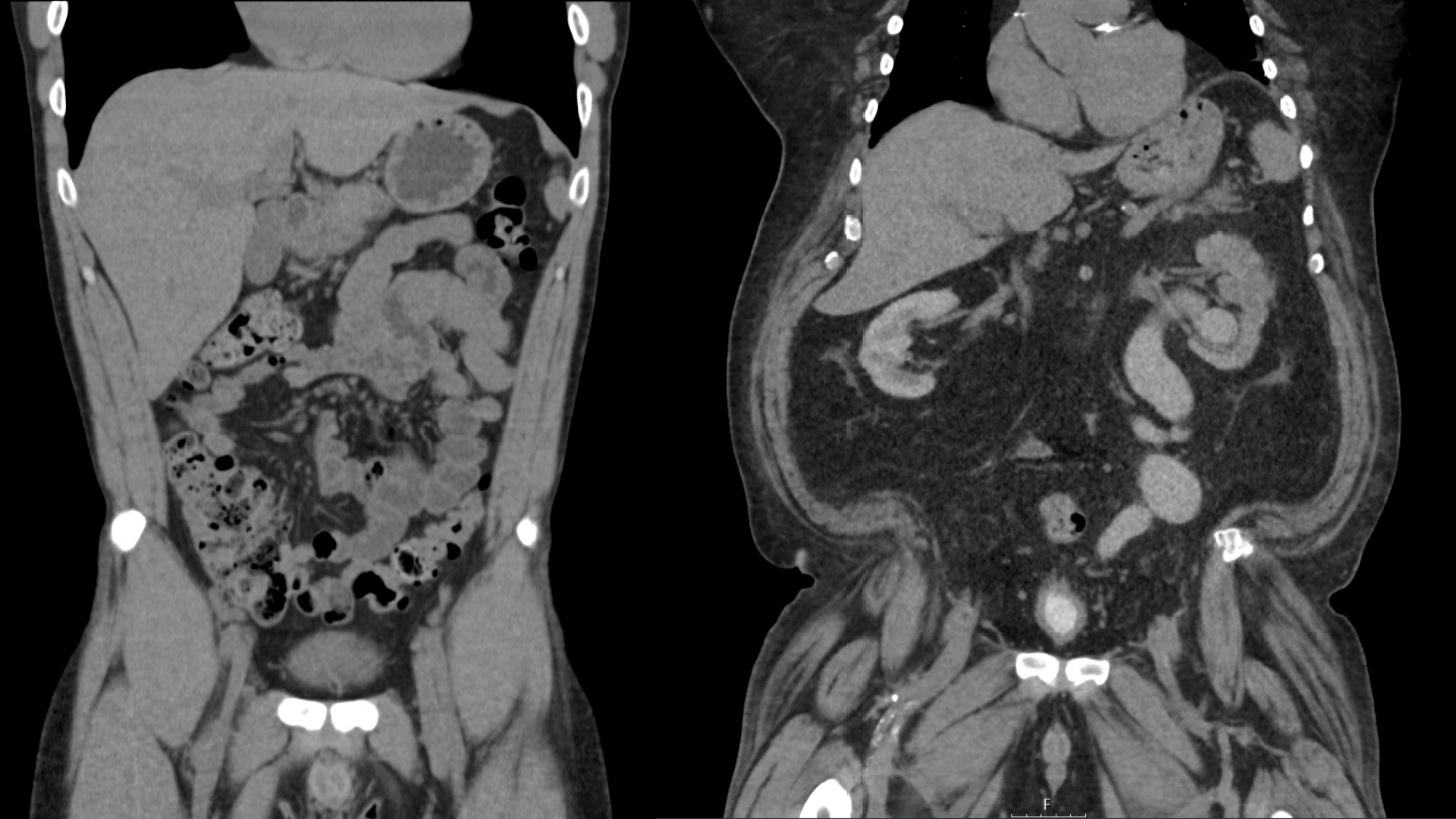
The gentleman on the left has minimal visceral fat. Notice how his abdominal wall is straight, and there is minimal black colour within his abdomen and around his intestines.
The gentleman on the right has type II diabetes, and highly advanced visceral fat, even while also having minimal subcutaenous fat. Note how his abdominal wall is distended, blown out, by the pressure of the fat inside.
What causes visceral fat?
Visceral fat accumulates over years to decades by a combination of factors related to diet, lifestyle, circadian/light environment and (lack of or specific types) of exercise.
Key factors that drive its accumulation include:
- circadian rhythm disruption including any type of sleep disruption
- sunlight avoidance
- ultra-processed foods - seed oils, refined grains, sugar
- chronic stress - emotional, constant nnEMF/artificial light exposure
- alcohol
- carbohydrates, particularly non-seasonal, in excess of metabolic and solar demands
- chronic cardio exercise (e.g. marathon jogging)
These factors interact with genetically determined susceptibility to metabolic disease, so called 'personal fat threshold' to influence the point at which visceral fat stores expand and exceed 'safe storage' of subcutaneous fat.
Those of sub-continental, east asian, pacific islander, indigenous origin are particularly vulnerable and will develop visceral fat more readily with the same inputs compared to many of northern european origin.
Bad news about Visceral fat
- Radiologists do not report it on routine CT, Ultrasound or MRI scans! It so common it is ‘unremarkable’, despite the harm its doing to you.
- You can be carrying Visceral fat with ‘normal’ blood tests - and most do. CT/MRI with interpretation by a trained physician is gold standard to identify visceral fat.
- Damage of visceral fat is related not only to amount you carry, but also the amount of time you have carried it. Longer visceral fat has existed, the more damage it has done and the more difficult (but certainly not impossible) to remove.
Good news about Visceral fat
- You can reverse your visceral fat with strategic lifestyle changes. By doing so, you drastically reduce your long term chronic disease risk.
- If you have had CT or MRI performed for another reason, the images can be reviewed to establish your visceral fat baseline.
What to do about your Visceral fat
Magnetic Resonance Imaging (MRI) is the gold standard for identifying visceral fat in a dedicated scan. MRI provides the highest resolution images without exposing you to ionising radiation (like CT or Xray). I will be shortly launching a visceral fat reversal service including dedicated scans for identifying visceral fat and its elimination over time.
The long term metabolic damage of visceral fat can be biochemically identified through certain blood tests - fasting insulin, fasting glucose and HbA1c key among them. To discuss your metabolic health with Dr Max, request a review of historic imaging, book a consult below or get in contact.
Consult Dr Max on Visceral FatLearn more
The following videos contain more information about visceral fat, how to identify it, and how to eliminate it.
- My interview with Chris Stadtherr, MD, a deep dive on the role of visceral fat and exact factors that exacerbate it, and how to reverse it.
- My second interview with Dr Sean O'Mara on using MRI imaging for visceral fat.
- My interview with Dr Ankur Verma, Indian emergency physician on true underlying causes of heart disease, including visceral fat.
- My interview with Laszlo Boros, PhD on the link between deuterium intake and visceral fat deposition.
- My presentation 'Identifying and Eliminating Visceral Fat for Optimal Health' - at REGENERATE Albury summit 2023.
More images of visceral fat
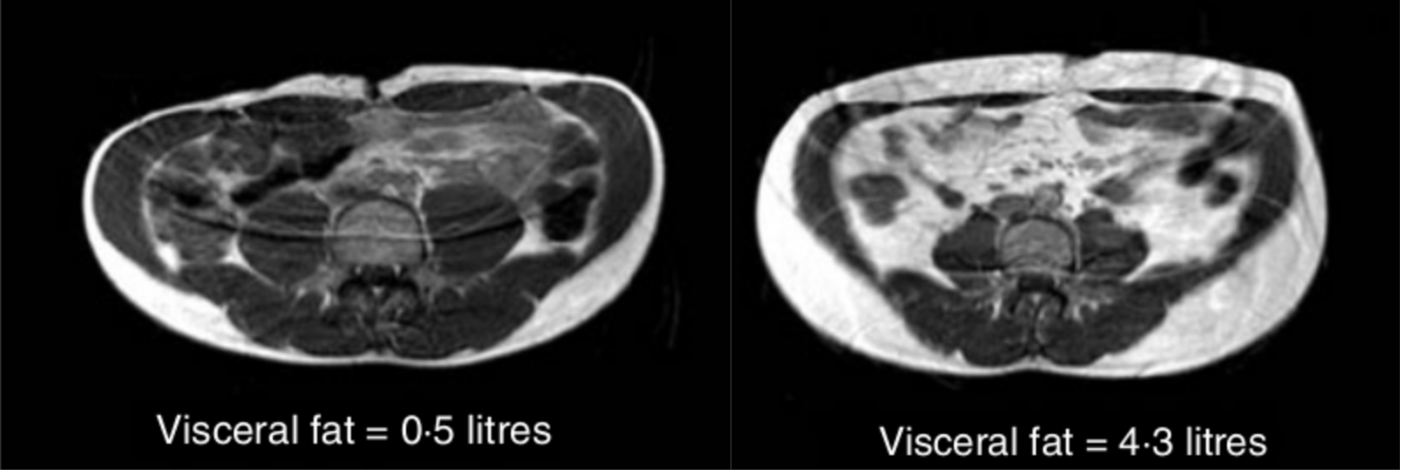
MRI images of two men with the exact same waist circumference of 84cm but radically different body composition, fat compartments and therefore metabolic health and chronic disease risk.
On these MRI images fat appears white, in contrast to CT.
How Metabolically Healthy Are You?
Get my free Metabolic Health Scorecard and learn how to interpret the key markers of metabolic health — including blood glucose, insulin, triglycerides, inflammation and body composition.
You'll also learn why apparently “normal” blood tests don't always tell the whole story...
